
New flooring changes the look and feel of a room, but the right choice is about more than appearance. Moisture, foot traffic, subfloor condition, maintenance, and the product's installation requirements all affect how a floor performs after the project is finished. Hardwood, vinyl plank, and laminate can each be a good fit when the material matches the room.
This guide compares common characteristics to help homeowners in Massachusetts and Connecticut ask better questions before buying. Product construction and warranty terms vary, so check the specific manufacturer's instructions instead of relying on a general rule alone.
Hardwood: natural character and refinishing potential
Hardwood has a natural grain and can often be sanded and refinished, depending on its thickness, construction, and condition. It is commonly considered for living rooms, dining rooms, and bedrooms where the subfloor and indoor environment are suitable. The National Wood Flooring Association's consumer resources offer additional guidance on choosing and caring for wood flooring.
Wood responds to changes in moisture and humidity. Spills, persistent dampness, and large seasonal swings can contribute to movement or surface damage. Solid hardwood is generally not a default choice for bathrooms or below-grade rooms; discuss the specific product and site conditions with a flooring professional before choosing it for a moisture-prone area. Engineered hardwood has a different layered construction, so its suitability also depends on the product and installation instructions.
Vinyl plank: a practical option for many busy rooms
Vinyl plank flooring is a resilient floor covering made in plank formats that can resemble wood or stone. Product lines differ in core construction, wear layer, attached backing, and installation method. Some products are labeled waterproof, but that label does not mean the entire floor assembly—or the subfloor below it—cannot be damaged by water. Check the warranty, seam and perimeter requirements, and cleanup instructions for the exact product.
Because of its product variety and available designs, vinyl plank is often considered for kitchens, entry areas, and other active spaces. It still needs a suitable, clean, dry, and sufficiently flat base. The Resilient Floor Covering Institute provides background on resilient flooring and its product categories.
Laminate: a wood-look surface with product-specific limits
Laminate typically uses a decorative image layer over a fiberboard-based core and a protective wear surface. It can offer a wood or stone appearance and may resist everyday surface scratching, but performance differs by product. Water resistance is not the same as waterproof performance: liquid that reaches joints, edges, or an unprotected core may cause damage.
Water-resistant and waterproof-core laminate products are available, but their limitations and warranty conditions vary. Before installing laminate in a kitchen, basement, or other area where spills or moisture are possible, confirm the manufacturer's approved locations, moisture limits, edge protection, and cleanup directions. The North American Laminate Flooring Association provides consumer and industry information about laminate flooring.
Match the flooring to the room
- Living rooms and bedrooms: Hardwood, engineered wood, vinyl plank, or laminate may work. Compare appearance, maintenance, sound, and the specific product's installation requirements.
- Kitchens and entryways: Spills and tracked-in moisture make product water-resistance instructions especially important. Protect the floor and clean spills promptly as directed by the manufacturer.
- Bathrooms and laundry rooms: Choose only a product expressly approved for the room and follow its instructions for seams, edges, and wet-area protection.
- Basements: Check for moisture and confirm that the selected product is approved for below-grade installation. Flooring alone does not fix a water or dampness problem in the basement.
- Homes with pets or heavy traffic: Compare wear-layer details, finish, scratch-care guidance, and how individual damaged boards or planks can be repaired or replaced.
Look at the subfloor before selecting a material
A new finish floor cannot reliably hide an unsuitable base. Soft or damaged areas, unevenness, movement, and moisture should be assessed before installation. The correction needed depends on the existing subfloor, the flooring product, and its installation method. Ask what preparation is included in the estimate and whether transitions, underlayment, or moisture-control steps are required.
For hardwood and laminate, acclimation requirements vary. Some products require time in the installation environment; others have different procedures. Follow the product's current installation guide for storage, temperature, humidity, and acclimation rather than applying a fixed number of hours to every job.
What to expect from a professional installation
- Assessment and measurements: Review the room, existing floor, subfloor, transitions, and any moisture concerns before finalizing the material and scope.
- Preparation: Remove or prepare existing flooring as needed, address unsuitable areas, and install approved underlayment or moisture-control materials if the product requires them.
- Product-specific installation: Follow the manufacturer's layout, fastening or locking method, expansion spacing, and room-condition requirements.
- Finishing details: Fit transitions and baseboards or other trim as included in the agreed project scope.
- Final review: Walk through the work, discuss care instructions, and clarify any product-specific maintenance or warranty requirements.
Examples from our flooring projects
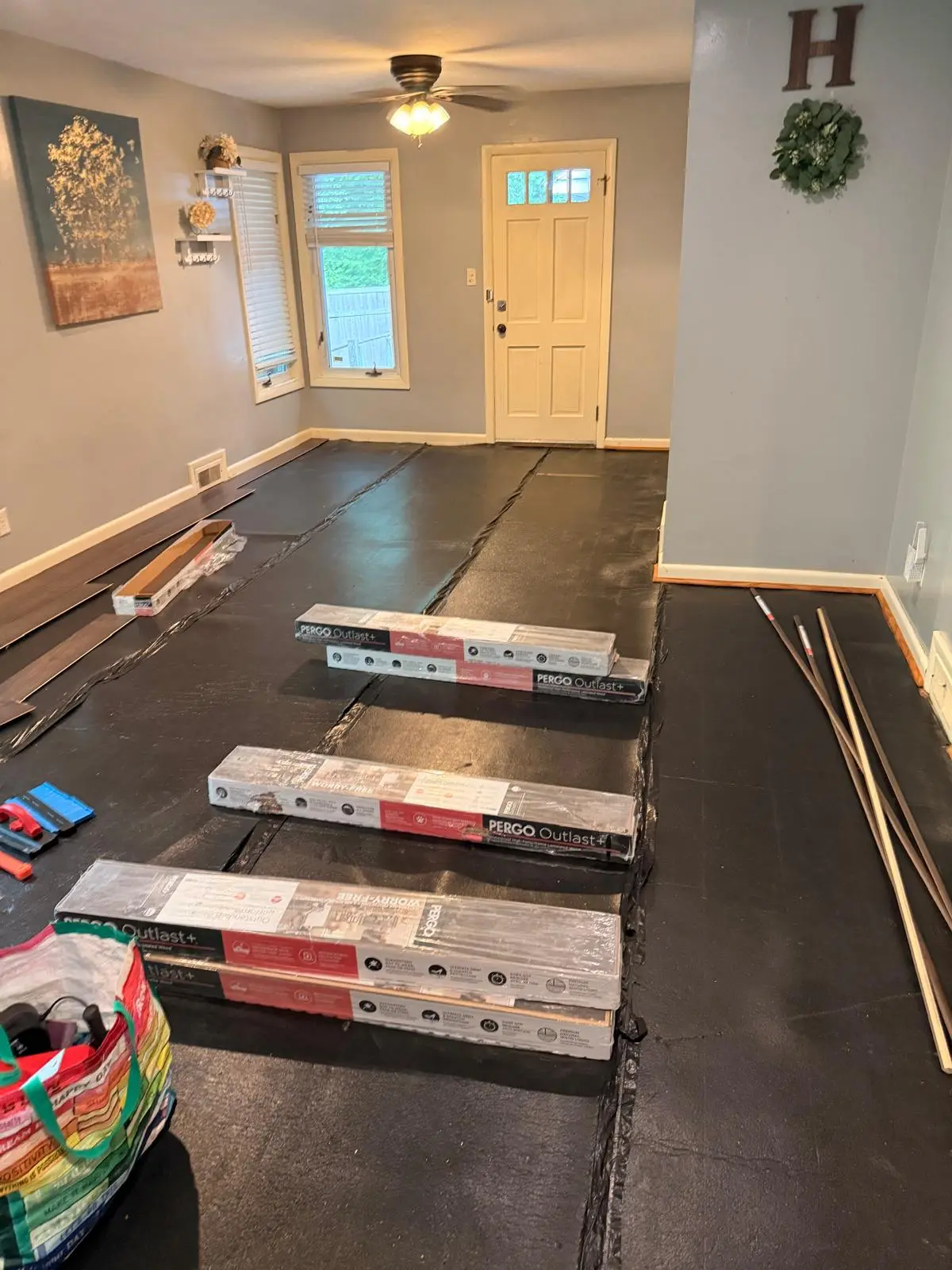
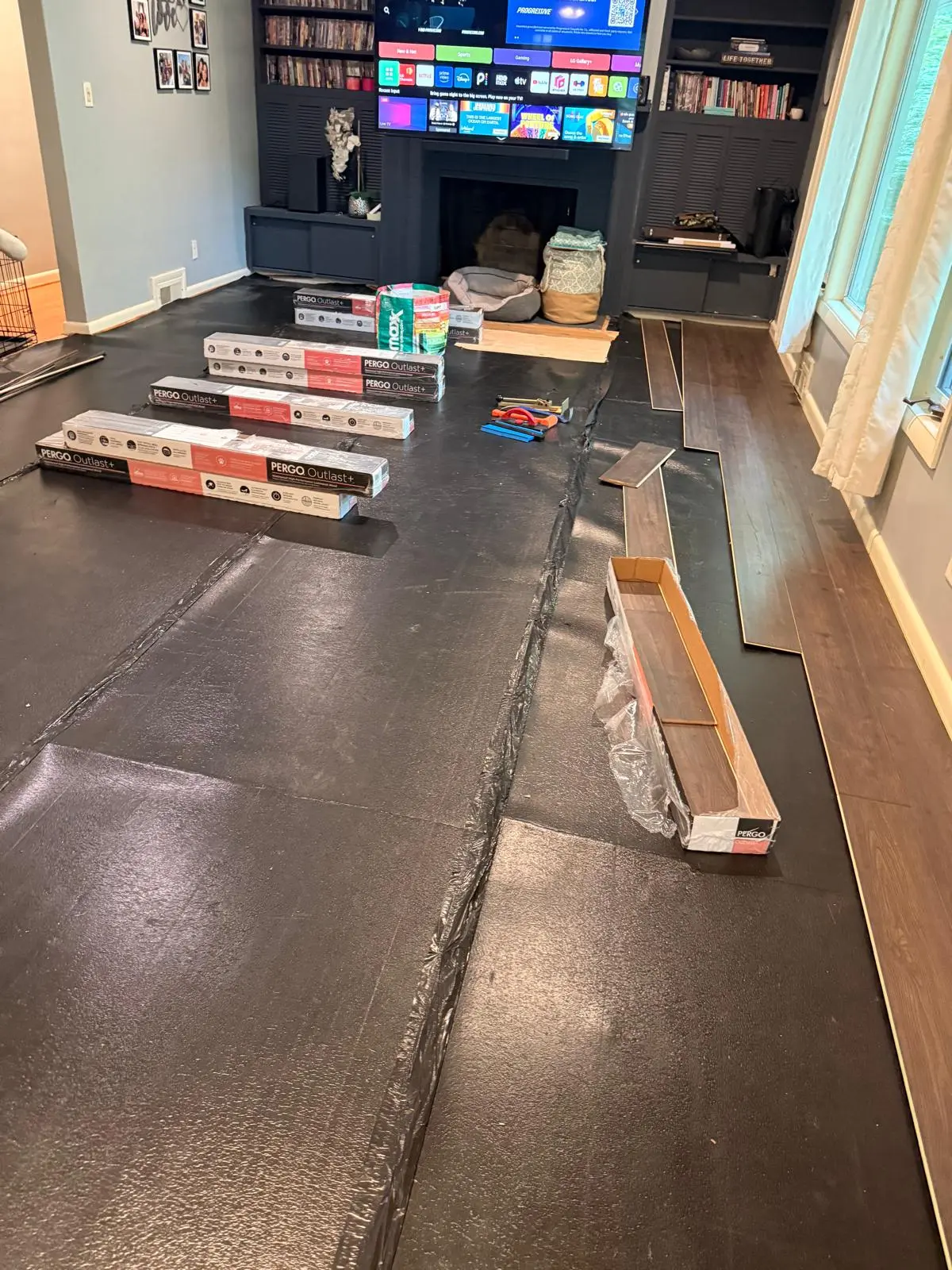
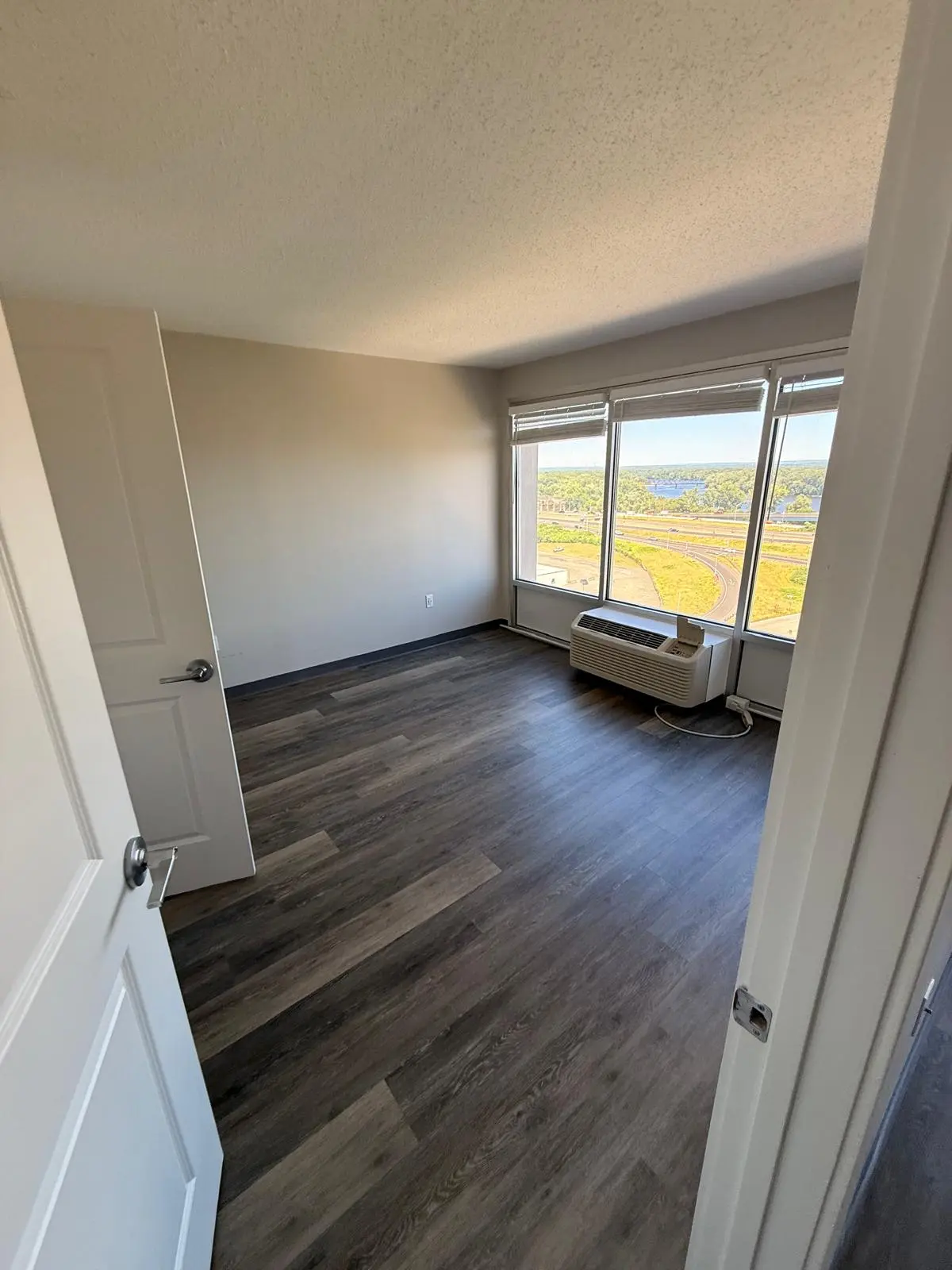
Repair or replace?
A few damaged planks may be repairable, particularly when the product and installation method allow individual pieces to be replaced. Hardwood with surface wear may be a candidate for refinishing if enough usable material remains and the floor is structurally sound. Widespread movement, recurring moisture damage, or a compromised subfloor calls for a closer assessment before deciding whether a repair will last.
Frequently asked questions
Which flooring is best for a basement?
There is no one answer for every basement. First investigate moisture and confirm that the product is approved for below-grade use. Some vinyl plank and laminate products may be suitable when installed under the manufacturer's conditions, but the flooring itself does not waterproof a basement.
Can new flooring be installed over an existing floor?
Sometimes. It depends on the new product's instructions and whether the existing surface is stable, clean, dry, and flat enough. Confirm compatibility and added floor height before installation.
How long does installation take?
Timing depends on room size, material, furniture and old-floor removal, subfloor preparation, and product requirements. An on-site assessment is the best way to discuss a realistic schedule for a specific project.
How much does flooring installation cost?
Cost depends on the selected material, measured area, removal and disposal needs, subfloor condition, and finishing details. SB Prime Solutions LLC can discuss the project and provide a free estimate.
Plan your flooring project
Before purchasing, compare the exact products—not just the material categories—and ask about moisture limits, installation requirements, warranty coverage, and care. SB Prime Solutions LLC installs flooring, including laminate, vinyl plank, and engineered hardwood, for homeowners in Massachusetts and Connecticut.
Need help deciding? Call or text (413) 381-7029 or send your room details and questions on WhatsApp to discuss a free estimate.